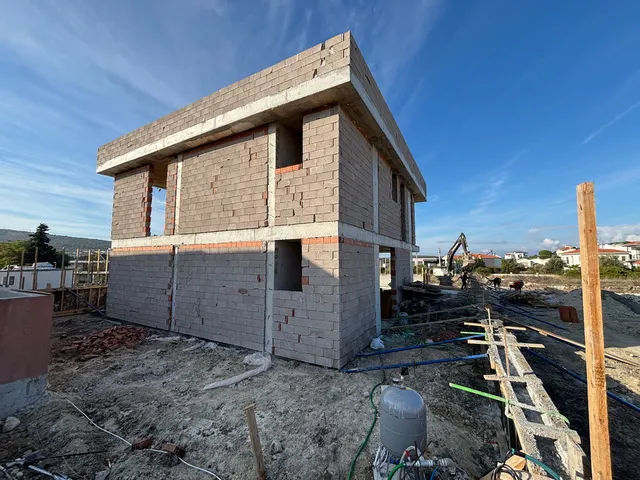
What Is Construction in Exchange for a Share of the Property? Benefits and Contract Terms
Construction in Exchange for Units, This is a construction model based on the principle that the landowner transfers their land to a contractor, who, in return, builds on the site and allocates some of the resulting independent units to the landowner and some to themselves. It is one of the most common ways for people who lack cash capital but own valuable land to become owners of a villa or residential property.
Advantages of Construction in Exchange for a Share of the Property
- The landowner acquires a new, high-quality building without making a cash investment.
- The contractor has the opportunity to develop the project without paying the land cost.
- The construction process is managed under one roof, from design through to handover.
- Once the landowner has taken delivery of the number of apartments or villas specified in the contract, they may sell or use their share as they wish.
Essential Terms That Must Be Included in the Contract
A construction contract in exchange for an apartment is an official document drawn up before a notary public and clarifies the rights and obligations between the parties. Clearly including the following provisions in the contract helps prevent future disputes:
- Sharing ratio: The number of individual units to be allocated to the landowner and the contractor, and which units will belong to whom.
- Construction period and completion date: The project’s start and end dates, and the penalty clause to be applied in the event of a delay.
- Technical Specifications: Quality of materials to be used and construction standards.
- Responsibility for licenses and permits: Which party will be responsible for obtaining the building permit and other official approvals.
- Collateral mechanism: Guarantees (mortgages, bank letters of credit, etc.) that protect the landowner in the event the contractor fails to fulfill its obligations.
The Difference Between a Share-for-Construction Agreement and a Turnkey Contract
In the "share-of-unit" model, payment is based on the land share, whereas in the "turnkey" model, the landowner is involved and the construction cost is paid in cash or in installments. In villa projects, the landowner typically prefers the turnkey model, while the "share-of-unit" model is more commonly used for large lots where multiple independent units can be built.
At İmerek Yapı, we are evaluating both turnkey villa projects and the “construction in exchange for a share of the property” model on suitable lots in Çeşme and Alaçatı. For more information, Contracting Services our page, including the terms of the agreement Clauses That Must Be Included in a Contract for Services You can read our article.
Frequently Asked Questions
Is a construction contract in exchange for an apartment executed at a notary's office?
Yes, because it creates rights in real property, a construction contract in exchange for an apartment is subject to the requirement of formal execution, and the provisions requiring a transfer of title are drawn up before a notary public.
Can the landowner interfere with the construction process?
The landowner has the right to supervise the project in accordance with the technical specifications set forth in the contract; however, day-to-day construction management is the contractor’s responsibility.
Does İmerek Yapı use the "floor-for-equity" model in its villa projects?
We are evaluating this model for suitable lots; we can work together to determine whether your lot is suitable for this type of development.